
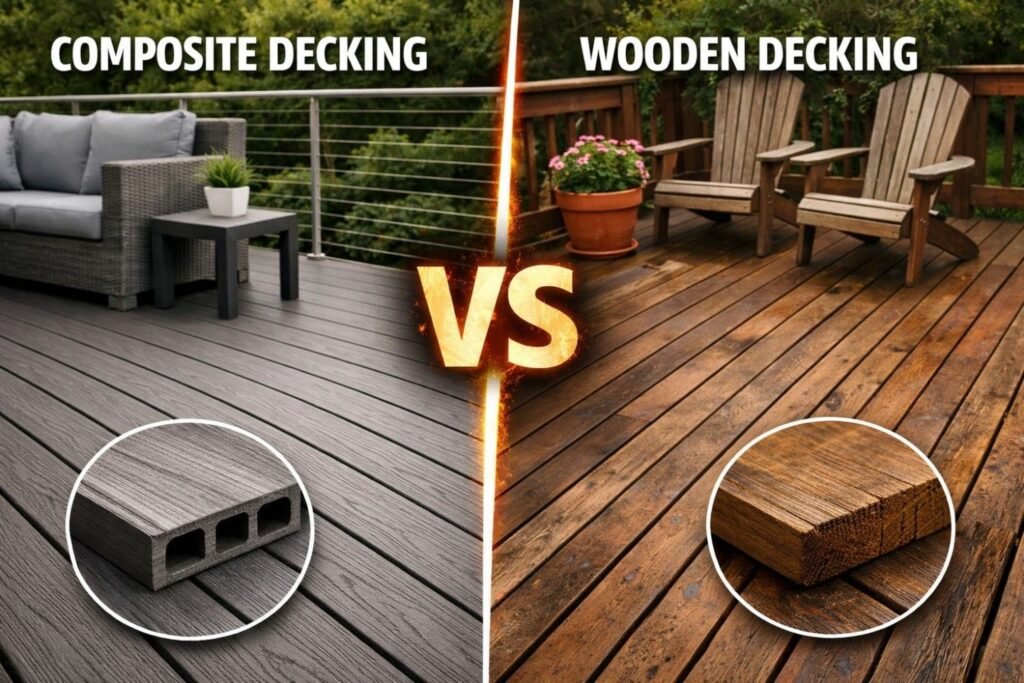
Designing outdoor spaces in the GCC requires materials that withstand intense heat, humidity, sand, and UV exposure while maintaining long-term visual appeal. As specialists in outdoor solutions, we understand that choosing between composite decking and wooden decking is a critical decision that directly impacts durability, maintenance, and overall investment value.
In this comprehensive guide, we present a detailed comparison to help property owners, developers, and architects select the most effective decking solution for GCC climates.
Understanding Composite Decking
Composite decking is an engineered material made from a blend of wood fibers and recycled plastics, designed to replicate the appearance of natural wood while delivering superior performance.
Companies like Timber Mart WPC have popularized this material across the GCC due to its weather resistance and low maintenance profile.
Key Features of Composite Decking
- UV-resistant surfaces that prevent fading under harsh sunlight
- Moisture resistance, eliminating risks of rot and mold
- Anti-slip textures, ideal for pool decks and patios
- Color consistency without the need for staining or painting
- Eco-friendly composition using recycled materials
Composite decking is specifically engineered for extreme climates, making it particularly suitable for GCC outdoor installations.
Understanding Wooden Decking
Wooden decking remains a traditional and widely appreciated option due to its natural beauty and organic texture. Popular wood types in the GCC include teak, ipe, cedar, and pressure-treated timber.
Key Features of Wooden Decking
- Authentic aesthetic appeal with natural grain patterns
- Customizable finishes through staining and painting
- High initial strength, depending on wood species
- Natural insulation properties
While visually appealing, wooden decking requires continuous care and protection to perform well in the GCC environment.
Climate Performance in GCC Conditions
Composite Decking Performance
In GCC regions, temperatures often exceed 45°C, with high UV radiation and sand exposure. Composite decking excels in these conditions due to:
- Thermal stability, reducing expansion and contraction
- Resistance to cracking, warping, and splintering
- Protection against sand abrasion and humidity
Composite materials maintain their structural integrity and appearance even after prolonged exposure to desert climates.
Wooden Decking Performance
Natural wood reacts significantly to environmental stress:
- Expansion and contraction due to heat fluctuations
- Susceptibility to cracking and warping
- Moisture absorption, leading to decay or fungal growth
- Color fading under intense sunlight
Without regular maintenance, wooden decks can deteriorate quickly in GCC conditions.
Maintenance Requirements
Composite Decking Maintenance
Composite decking offers minimal maintenance, which is a major advantage for residential and commercial projects.
- Occasional cleaning with water and mild detergent
- No sanding, staining, or sealing required
- Long-lasting surface without refinishing
This makes it ideal for busy homeowners and large-scale developments.
Wooden Decking Maintenance
Wooden decking requires continuous upkeep:
- Annual sanding and sealing
- Regular staining or painting
- Protection against termites and moisture
- Frequent inspections for cracks and damage
Maintenance costs can significantly increase over time, especially in harsh GCC climates.
Durability and Lifespan
Composite Decking Durability
Composite decking is designed for long-term performance, typically lasting 20–30 years or more.
- Resistant to rot, insects, and moisture
- Maintains structural strength over time
- Does not splinter, ensuring safety
Wooden Decking Durability
Wood decking lifespan varies depending on maintenance and wood type:
- Average lifespan: 10–15 years
- High-end hardwoods may last longer with proper care
- Vulnerable to environmental damage
In GCC environments, wooden decks often require replacement sooner than expected.
Aesthetic Appeal and Design Flexibility
Composite Decking Design
Modern composite decking offers high-end finishes that replicate natural wood with added benefits:
- Wide range of colors and textures
- Uniform appearance across installations
- Fade-resistant finishes
Design consistency makes composite decking ideal for luxury villas, hotels, and commercial landscapes.
Wooden Decking Design
Wood provides unique, natural variations:
- Rich grain patterns
- Warm, organic appearance
- Ability to customize colors through staining
However, maintaining this aesthetic requires continuous effort and expense.
Cost Comparison: Short-Term vs Long-Term Investment
Composite Decking Costs
- Higher upfront investment
- Minimal maintenance expenses
- Long lifespan reduces replacement costs
Composite decking offers better long-term value, especially in demanding climates.
Wooden Decking Costs
- Lower initial cost
- High maintenance expenses over time
- Frequent repairs and replacements
While initially affordable, wood becomes more expensive in the long run.
Safety and Comfort
Composite Decking Safety
- Slip-resistant surfaces for wet areas
- No splinters, making it family-friendly
- Heat-resistant options available
Wooden Decking Safety
- Can become slippery when wet
- Risk of splinters and cracks
- Surface temperature can increase significantly
Composite decking provides a safer and more comfortable outdoor experience.
Environmental Impact
Composite Decking Sustainability
- Made from recycled materials
- Reduces demand for natural timber
- Long lifespan minimizes waste
Wooden Decking Sustainability
- Requires continuous harvesting of trees
- Chemical treatments may impact the environment
- Shorter lifespan increases material consumption
Composite decking aligns better with sustainable construction practices.
Best Applications for Each Material
Where Composite Decking Excels
- Pool decks and waterfront areas
- Rooftop terraces
- Commercial outdoor spaces
- High-traffic residential areas
Where Wooden Decking Fits
- Traditional garden settings
- Low-traffic decorative areas
- Projects prioritizing natural aesthetics over durability
Final Verdict: The Best Choice for GCC Outdoor Spaces
For the GCC’s extreme climate, composite decking stands out as the superior solution. Its durability, low maintenance, resistance to environmental stress, and long-term cost efficiency make it the preferred choice for modern outdoor living.
Wooden decking, while aesthetically appealing, requires significant upkeep and is less suited to harsh weather conditions.
By choosing composite decking from trusted suppliers such as Timber Mart WPC, we ensure long-lasting performance, premium aesthetics, and maximum return on investment for outdoor spaces across the GCC.
Conclusion:
Composite decking is not just an alternative—it is the future of outdoor design in the GCC, delivering unmatched performance where it matters most.